
7 Things to Check Before Hiring an MEP Contractor
Choosing an MEP contractor is one of the most important decisions in a building project.
Mechanical, electrical, and plumbing systems are not simply supporting components hidden behind walls and ceilings. They directly affect the safety, functionality, comfort, energy performance, and long-term operation of the building.
A contractor may offer an attractive price at the beginning, but a lower quotation does not always mean a lower total project cost. Incomplete service scopes, weak coordination, installation errors, delayed work, poor documentation, and limited maintenance support can create significantly higher expenses later.
This is why project owners should not choose an MEP contractor Indonesia based only on the lowest price.
The right contractor should be able to understand the project requirements, coordinate multiple building systems, communicate clearly with other stakeholders, document the work, and support the building after the installation has been completed.
Before making a decision, use the following contractor checklist to evaluate whether an MEP company is truly prepared to become a reliable project partner.
1. Check Whether the Contractor Has a Relevant Portfolio

A long project list is not automatically a relevant portfolio.
The first question should not be, “How many projects have you completed?” Instead, ask:
“Have you handled projects with requirements similar to ours?”
Every building has different operational and technical demands. The systems required by a hospital are not the same as those needed by a villa, hotel, commercial building, government office, or shopping centre.
Hospital projects, for example, may involve controlled airflow, specialised HVAC systems, radiation protection, modular operating theatres, fire protection, backup power, and other critical infrastructure. Hospitality projects may prioritise guest comfort, reliable water supply, energy efficiency, and systems that can be maintained without disrupting daily operations.
A relevant portfolio helps demonstrate that the contractor understands the conditions, coordination requirements, and technical challenges of your industry.
When reviewing a portfolio, check:
- The type and scale of previous projects
- The systems included in each project
- The contractor’s role and responsibilities
- Project locations
- Installation and completion documentation
- Experience working with consultants and main contractors
A professional building system contractor should be able to explain what was delivered, not simply display photographs of completed buildings.
Real project experience provides stronger evidence than promotional claims.
2. Review the Complete Service Scope
MEP work often involves several interconnected systems.
Electrical installation can affect HVAC equipment. Plumbing may need to be coordinated with structural and architectural plans. Fire fighting systems must be integrated with alarms, pumps, electrical panels, and building access. Electronic and security systems may also require coordination with power, data, and communication infrastructure.
If too many separate vendors are involved, project owners may face:
- More complicated communication
- Overlapping responsibilities
- Installation conflicts
- Slower decision-making
- Unclear accountability
- Higher coordination costs
- Greater risk of project delays
Before hiring an MEP company, review its complete service scope.
Does the contractor only handle electrical work? Does it specialise only in air conditioning? Or can it coordinate multiple systems within one project?
A broader service scope may include:
- Mechanical systems
- Electrical installation
- Plumbing systems
- HVAC and ventilation
- Fire fighting systems
- Electronic and security systems
- Building construction
- Elevator installation
- Medical building systems
- Testing and commissioning
- Preventive maintenance
This does not mean every project needs every service. However, choosing a contractor with integrated capabilities can simplify coordination and reduce dependency on multiple vendors.
The strongest value is not merely having many services. It is the ability to manage those services under one clear coordination process.
3. Evaluate the Technical Team Behind the Company
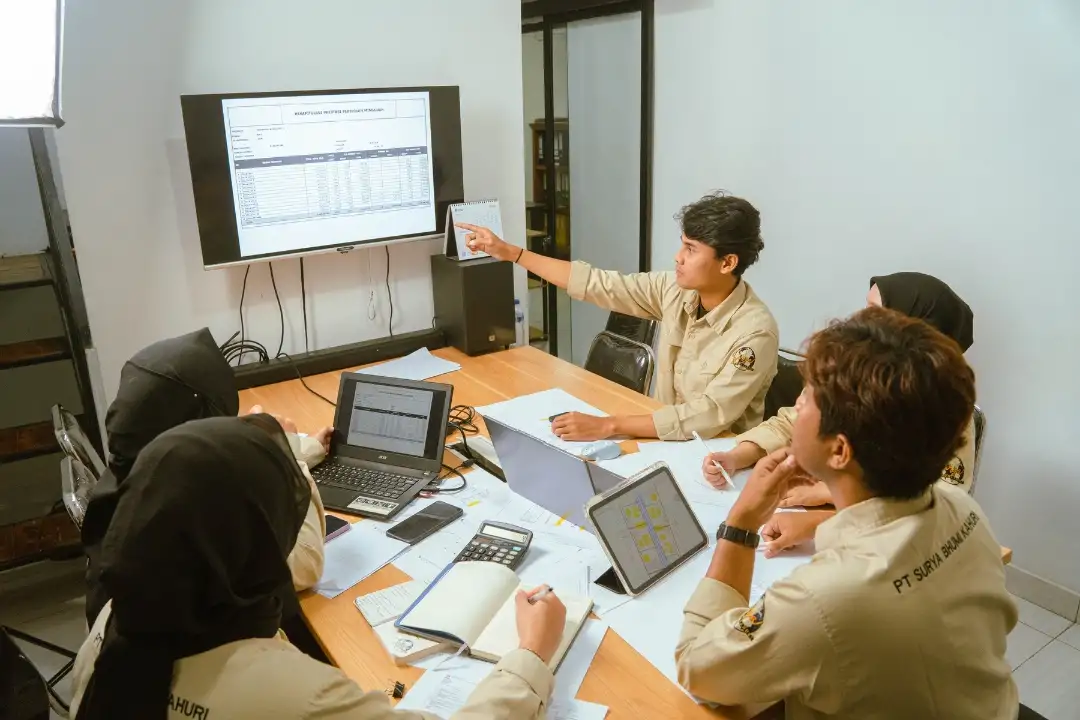
A professional website and company profile may create a good first impression, but the technical team determines how the project will actually be executed.
Project owners should understand who will be responsible for planning, supervision, installation, quality control, testing, and communication.
Ask the contractor about:
- The project manager
- Site supervisors
- Engineers
- Technicians
- Safety personnel
- Quality-control responsibilities
- Specialist teams for complex systems
- Coordination with consultants and architects
The contractor should also be able to explain how technical decisions are reviewed before work begins.
For specialised projects, relevant experience becomes even more important. Hospital facilities, for example, may require knowledge of lead shielding for X-ray or CT scan rooms, modular operating theatres, controlled ventilation, HEPA filtration, temperature control, and room-pressure requirements.
These systems should not be treated as ordinary installations.
A reliable technical contractor understands that every system must work as part of the entire building. The team should not focus only on completing individual installation tasks without considering operational performance, safety, accessibility, and future maintenance.
4. Examine the Project Documentation Process

Documentation is often overlooked during contractor selection, but it becomes essential when the project is underway or after the building begins operating.
Poor documentation can make it difficult to:
- Track project progress
- Verify completed work
- Review installation changes
- Identify equipment specifications
- Conduct future maintenance
- Handle system problems
- Coordinate with facility-management teams
Before appointing a contractor, ask what project documents will be provided.
Depending on the project scope, the documentation may include:
- Work plans
- Material submissions
- Equipment specifications
- Installation progress reports
- Testing records
- Commissioning results
- Site documentation
- As-built drawings
- Operation and maintenance information
- Handover documentation
Good documentation supports accountability. It also protects the project owner by creating a clear record of what was installed, tested, revised, and approved.
When comparing quotations, remember that a lower-priced contractor may exclude important documentation, testing, or commissioning activities. The initial price may appear attractive, but the missing work can create additional costs and operational risks.
Reliable professional MEP services should include a clear documentation process from planning to handover.
5. Understand How the Contractor Communicates
Technical capability alone is not enough.
MEP projects involve continuous coordination between owners, architects, consultants, main contractors, suppliers, project managers, and field teams. Even a technically skilled contractor can create problems if communication is slow, unclear, or inconsistent.
Before signing a contract, understand how communication will be managed.
Ask:
- Who will be the main point of contact?
- How often will progress updates be provided?
- How are technical issues reported?
- Who approves changes?
- How are site instructions documented?
- How are delays or material problems communicated?
- Will coordination meetings be conducted regularly?
A strong communication process helps prevent small issues from becoming expensive project problems.
For example, if an HVAC duct conflicts with structural work, the contractor should identify and communicate the issue before installation continues. If electrical requirements change, the effect on panels, cabling, equipment, and timelines should be explained clearly.
Good communication is not about sending more messages. It is about ensuring that the right information reaches the right decision-maker at the right time.
This is a major part of successful project planning.
6. Confirm Maintenance and After-Project Support
An MEP contractor’s responsibility should not automatically end when installation is completed.
Building systems require inspection, servicing, adjustment, replacement, and preventive maintenance throughout their operational life. HVAC equipment must be maintained. Fire protection systems need inspection. Electrical panels should be monitored. Pumps, plumbing lines, security systems, and elevators may also require regular attention.
Before choosing a contractor, ask whether maintenance support is available.
Important questions include:
- Is preventive maintenance offered?
- Can the contractor inspect previously installed systems?
- Is emergency support available?
- Are maintenance schedules provided?
- Can replacement parts or equipment be sourced?
- Will the maintenance team have access to project documentation?
- Can support be provided after the warranty period?
A contractor that offers installation and maintenance can provide better continuity because the team already understands the project’s systems and history.
This also reduces the need to explain the building from the beginning to a different vendor.
A long-term construction partner should support the building not only during installation, but also throughout its operation.
7. Verify the Ability to Work Outside Bali
For projects outside the contractor’s home region, location should not be evaluated only by the company’s office address.
The more important question is whether the contractor has the operational capability to manage projects in other regions.
A Bali-based contractor may still be able to handle projects across Java, NTB, NTT, Kalimantan, Sulawesi, or other parts of Indonesia if the company has appropriate systems for mobilisation, manpower, procurement, supervision, communication, and project control.
Ask how the contractor manages:
- Site mobilisation
- Technical-team deployment
- Local workforce coordination
- Material and equipment delivery
- Accommodation and project logistics
- Remote reporting
- Quality supervision
- Communication with project owners
- Maintenance after completion
A contractor that claims national capability should be able to explain how projects outside Bali will be managed in practical terms.
The ability to work nationally is not only about travelling to another island. It requires a structured operational process that keeps quality, communication, documentation, and accountability consistent across locations.
For project owners seeking an MEP contractor Indonesia, this capability becomes especially important when the project involves multiple sites or future expansion.
Price Matters, but It Should Not Be the Only Decision
Budget will always be an important part of contractor selection.
However, comparing contractors only through the final number in a quotation can be misleading. Two proposals may appear similar while covering very different responsibilities.
One quotation may include testing, commissioning, documentation, supervision, and maintenance preparation. Another may include only installation.
Before choosing the lowest price, compare:
- The complete service scope
- Materials and equipment specifications
- Exclusions
- Technical supervision
- Documentation
- Testing and commissioning
- Safety procedures
- Maintenance support
- Project communication
- Team mobilisation
The cheapest contractor at the beginning may become the most expensive option if the project requires rework, additional vendors, delayed handover, or repeated repairs.
The right decision is not simply finding the lowest quotation. It is finding the contractor that provides the clearest scope, relevant experience, reliable coordination, and long-term value.
Choose One Team That Understands the Whole Building
An effective MEP contractor should understand how different systems work together.
Electrical, plumbing, HVAC, fire protection, electronic systems, elevators, and specialised facilities should not be treated as isolated installations. Each system contributes to the safety and operational performance of the building.
PT. Surya Bhumi Kahuri provides integrated Building and MEP services for hospitals, government facilities, hospitality properties, commercial buildings, and other project sectors.
Through the principle of One Team for All Building Systems, SBK supports projects from installation and coordination to documentation, testing, commissioning, and maintenance.
With experience across different building sectors and readiness to support projects beyond Bali, SBK can work as an integrated partner for project owners, developers, hospitals, hotels, government institutions, and main contractors.
Before selecting a contractor based only on price, evaluate the team, experience, service scope, communication, documentation, and long-term support behind the quotation.
A building does not need the cheapest collection of separate vendors.
It needs one coordinated team capable of making every essential system work together.